
The Marett Memorial Lecture 2026
The Anthropocene, Lost and Found: Towards an Eventful, Situated and Patchy Study of Planetary Disruption
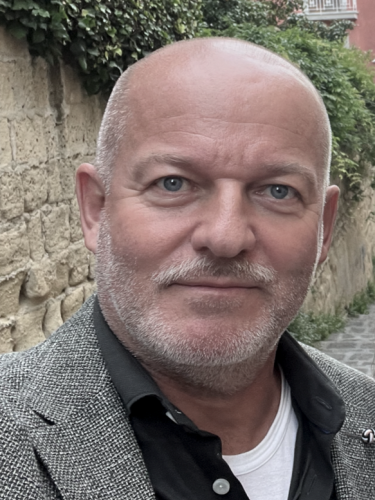
Professor Nils Bubandt (Aarhus University)
When the proposal to officially declare the Anthropocene as a new geological epoch was rejected in March 2024, it passed largely unnoticed in anthropology and most of the social sciences. It did so, I will argue, for reasons that were both fully understandable and profoundly mistaken. Excavating the issues of temporality and plurality that are at the heart of the rejection of the Anthropocene as a formal epoch or chronostratigraphic series, I will argue that the disregard blocks us in anthropology and other social sciences from seeing not only the interdisciplinary rapprochement but also the analytical opportunity that the rejection of the term has potentially opened up: namely, the study of the Anthropocene as inherently multiple, eventful, situated, and patchy. Some ethnographic examples from Indonesia and three strands of thought from R.R. Marett will guide this argument.
This talk examines two important moments in the racialisation of kinship and care. One is the repatriation of destitute 'Eurasians' from the UK in the early twentieth century and the links of this to contemporary ancestry online platforms that erase colonial connections. The second is the necropolitics of 'care' for minoritized groups, who were seen to have dangerous forms of kinship during Covid-19 in the UK. Overall it calls for a theoretical approach to racialisation focussed on the biomoral that draws on Fanon's concepts of sociodiagnosis and transmutation. It also suggests anthropological methods that deploy group practices of sociotherapy. Finally it turns to the imagination of new forms of welfare that are restitutive and care-work based.
All welcome!