Announcement: Professor Wendy James FBA
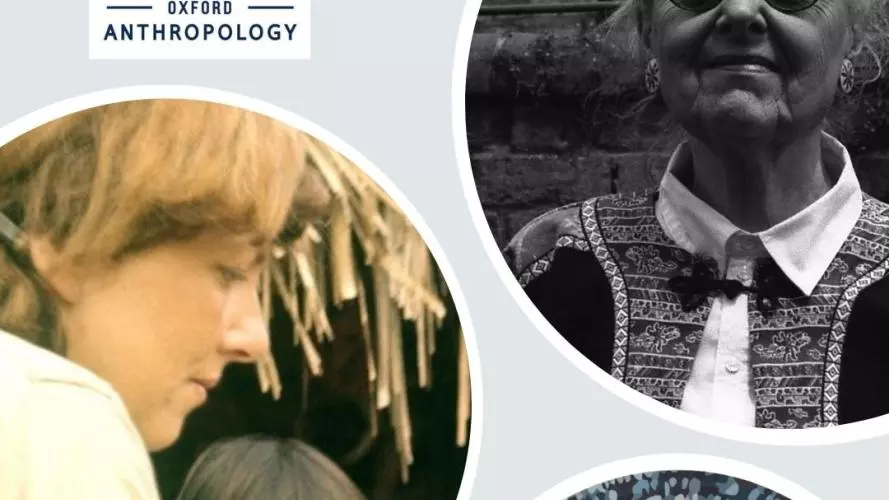
Professor Wendy James FBA died peacefully on Saturday 27 April 2024.
Wendy was a major figure in the school of Anthropology and Museum Ethnography between 1972 and 2007. Her long and distinguished career included the award of a CBE in 2011 and Presidency of the Royal Anthropological Institute between 2001 and 2004. She was also Vice-President of the British Institute in Eastern Africa (2001-2011).
She is best known for her trilogy of ethnographic and historical works on the Uduk of Sudan, 'Kwanim Pa (1979), The Listening Ebony (1988), and War and Survival in Sudan's Frontierlands (2007). She wrote on Mauss, Durkheim, Collingwood, and other anthropological ancestors, and also penned a notable overview of the discipline, The Ceremonial Animal: A New Portrait of Anthropology (2003). The latter incorporated insights from evolutionary anthropology, including the British Academy 'Lucy to Language' project in which she was involved.
Before taking up her lectureship at Oxford she taught in the Universities of Khartoum and Bergen and subsequently was consulted by UN bodies, NGOs working with refugees, and the FCO during and after the Sudan's civil war (1983-2005). Wendy actively supported and taught Human Sciences throughout her teaching career at Oxford. In 2023 the school welcomed the endowment of a new position, the Wendy James Associate Professorship in Evolutionary Anthropology, with a tutorial fellowship in Human Sciences at St Hugh's College.
Read Professor Wendy James' obituary in The Times: