
From Thesis to Book
Noëlle Rohde on the publication of her book Marked, drawn from her doctoral thesis
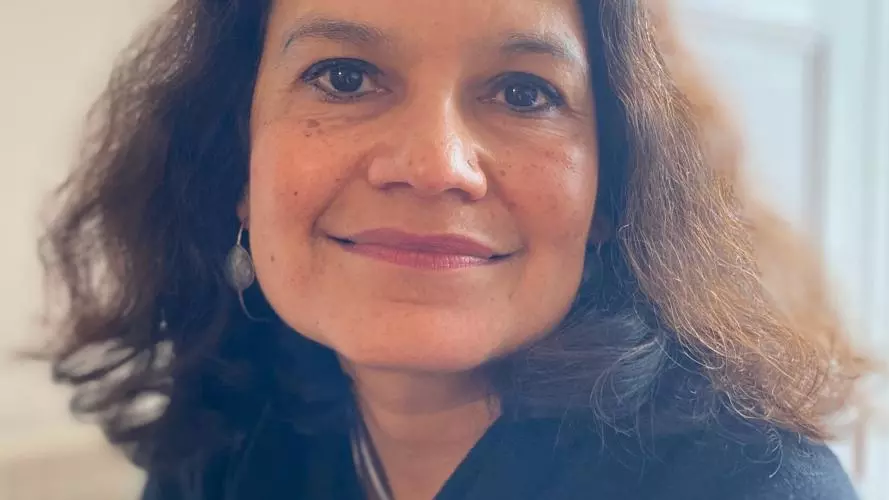
We spoke to Noëlle Rohde, winner of the Professor David Parkin Prize for the use of ethnographic methods, about the process of going from doctoral thesis to published book and her research into understanding what it means to be quantified.
1. What was the process to go from DPhil thesis to published work?
I spent the entire second year of my DPhil carrying out fieldwork, and started writing up the research in the third year. When I discussed the first few chapters with my supervisors - Morgan Clarke and Javier Lezaun - both of them suggested that I should envisage publishing the work as a monograph later. The idea was somewhat daunting at that point, but it was also a tremendous encouragement and I believe it influenced the structure of the thesis and my writing style early on.
Nevertheless, doctoral work is a piece of writing ultimately penned for assessment which necessarily shapes its form. In my case this meant it came with a lengthy literature review and methodology section which weren’t particularly reader-friendly. So after completing my DPhil, I set about editing the thesis and shaping it into a monograph format - pruning the technical discussions, revamping the introduction and conclusion, and including some new research.
It was towards the end of that process that heard about the LSE Press (via an internal newsletter). The renowned series LSE Monographs on Social Anthropology had recently moved to this publisher. To celebrate this, they were holding a first-book competition for early career anthropologists. It immediately felt like a perfect fit, so I put together a book proposal and handed it in with my manuscript.
I was very lucky that my work was chosen alongside that of two other authors, allowing it to be published diamond open access. The editorial board for the series took great care in reading the manuscript and providing feedback. On its basis, I completed a further round of editing before the actual publication process was set in motion. Over the past months, the fantastic team at LSE Press have steered the book through copyediting, indexing, typesetting, cover design, production and marketing until its recent official publication. To experience the kind of support and care for my work that I have at LSE Press is such a privilege - especially as a first-time author.
2. What tips would you have for other DPhil students hoping to publish their thesis?
During my DPhil, I attended several workshops on publishing and found these to be extremely helpful. They were organised by the Social Sciences Division and the Grand Union DTP. One of them was offered by Velda Elliott and Alex Betts and focused explicitly on monographs. If you get the chance to attend workshops like these, do it! Hearing about the publication process from seasoned academics is truly valuable and will give you insights into the most common pitfalls when putting together a book proposal. Many publishers also provide helpful checklists and guidelines on the latter on their websites. It is worth reading through a few of these to get a general sense of the requirements.
My top tip is William Germano’s classic work ‘From dissertation to book’. I read it from cover to cover and it was worth every minute. Germano sets out clearly what most publishers are looking for and makes you realise that re-writing at least parts of the thesis is inevitable in most cases. The book also provides practical tips on how to achieve the ‘voice’ which doctoral work sometimes lacks. Plus it’s fun to read! A second helpful book by Germano is ‘Getting it published’ which focuses more on the book proposal and how to approach publishers.
3. Is there anything you would do differently?
After I had submitted my manuscript to the publisher and was waiting for their response, I thought I’d do some more ‘background research’ to enhance the book with. I was knee-deep in a historical investigation of the contested predecessors of grading in antiquity when I received the good news - and it turned out that I had gathered way too much information to be put into the book.
I think there comes a point when you tend to over-edit your work. The feedback from the editorial board was really helpful to see where the manuscript needed more work - and where it didn’t. If I had waited, I would have saved myself some weeks of digging. On the upside, I now have enough material to write an article about the origins of grading; if I ever get around to it.
4. Your book has been described as ‘rich in ethnographic detail, and with a rare focus on grades as they are experienced by students’. Can you tell us about how you brought in that richness?
In the book ‘Writing ethnographic fieldnotes’ by Emerson et al. there is a beautiful description of the ethnographer’s profession. They write that an ethnographer needs to ‘recall observed scenes and interaction like a reporter; to remember dialogue and movement like an actor; to see colors, shapes, textures and spatial relations as a painter or photographer; and to sense moods, rhythms, and tone of voice like a poet’ (2011:34).
This quote really inspired me to treat fieldwork as a multidimensional activity, and to pay attention not just to the big picture but also to the little details that make up a situation. This approach does make participant observation quite challenging, cognitively, but I find it results in much richer ethnography. I try to approximate the field as much as possible in my writing - to allow the reader to be there in a sense, but also to do justice to the research participants’ experience.
5. This book is about quantification - what sparked your interest in understanding what it means to be quantified?
I am intrigued by the extent to which human life has become the object of numerical evaluation. Philosophers struggle to define concepts such as ‘intelligence’, ‘happiness’ or ‘knowledge’ because they are complex, elusive and even a bit mysterious. And yet, many of us seem to buy into the idea that these phenomena can be measured. Think only of the IQ score, world happiness rankings or the plethora of exams we go through in our lives.
Quantification research has really picked up over the past twenty years. We now have a much better understanding of how the high epistemic status of numbers shapes various social contexts from academia to the global health sector. In my research, however, I sought to focus explicitly on the ‘bearers’ of numbers; those to whom quantification is applied. Even though all of us are at the receiving end of numbers these days, the experience is little understood. My ethnography of the school grade is therefore intended as a testament to the quantified life - from the eyes of some of its youngest subjects.
More information
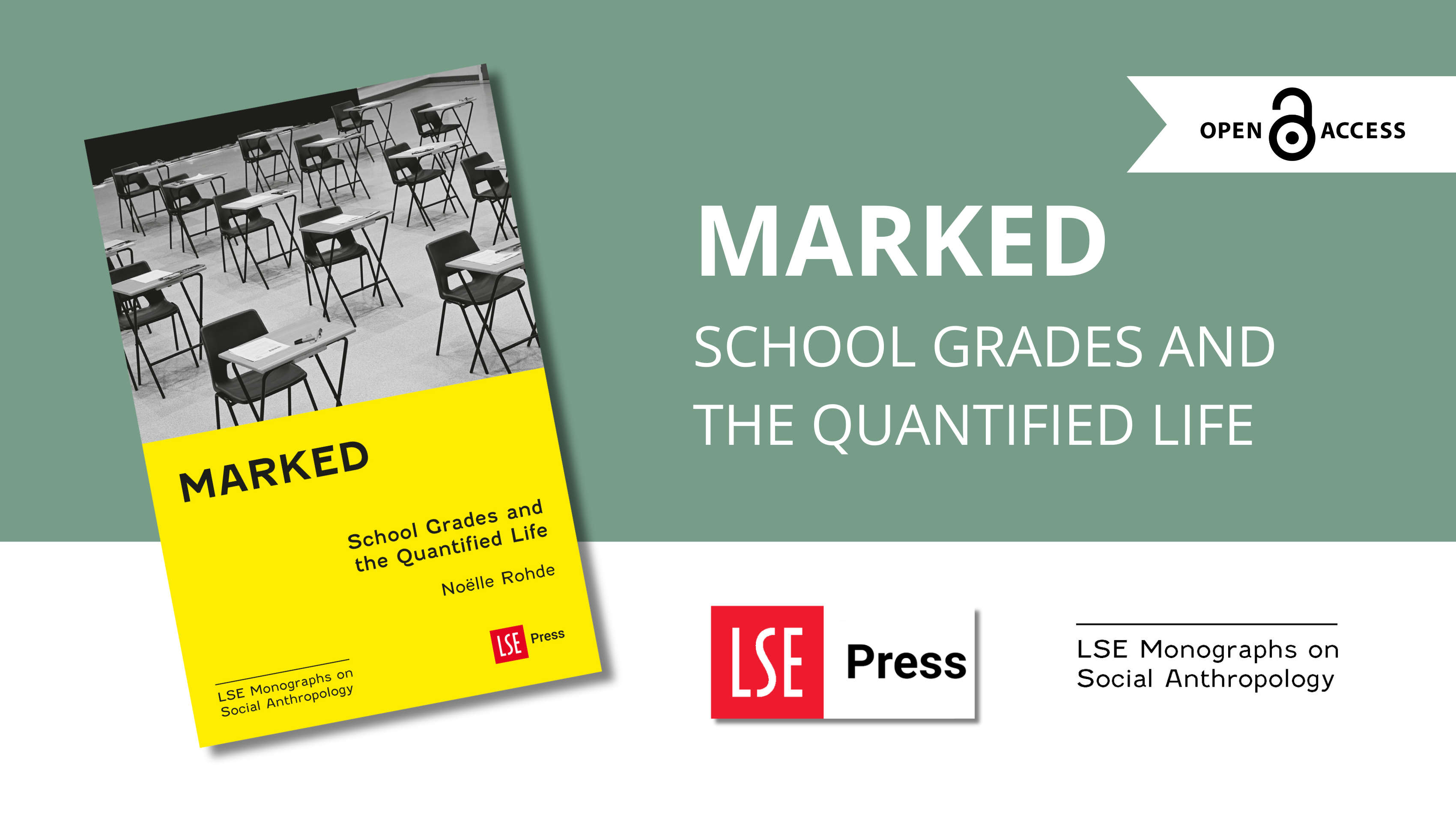
Marked: School Grades and the Quantified Life by Noëlle Rohde
Part of the LSE Monographs on Social Anthropology series
Book Launch
Thursday 8 October | Old Anthropology Library, London School of Economics
About Noëlle Rohde
Noëlle Rohde is a social anthropologist with a philosophy background and an interest in the social dimension of numbers. She earned her doctorate from the University of Oxford where her thesis on grading in Germany won the Professor David Parkin Prize for the use of ethnographic methods. Besides quantification, Noëlle Rohde’s academic interests are technology ethics, epistemology and critiques of meritocracy. She currently holds a postdoctoral scholarship at Paderborn University where she investigates quantification in sports.