Monographs
[1999] 2024. 许小丽 (Elisabeth Hsu) 著 中医的传承 (The transmission of Chinese medicine). 蔣辰雪 (Jiang Chenxue), 肖坤* (Xiao Kunbing) I (translators). 上海: 上海教育出版社.
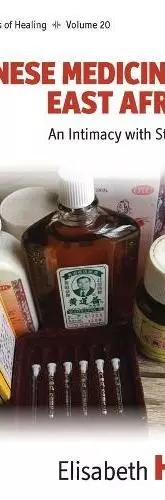
2022, Elisabeth Hsu, Chinese Medicine in East Africa: An Intimacy with Strangers, Oxford: Berghahn (hardback and ebook, partial transl. into Chinese underway, one third of six out of nine chapters based on parts of previous publications).
2010, Elisabeth Hsu, Pulse Diagnosis in Early Chinese Medicine: The Telling Touch, Cambridge: Cambridge University Press. 401pp. (hardback and paperback).
1999, Elisabeth Hsu, The Transmission of Chinese Medicine, 1999, Cambridge: Cambridge University Press. 296pp. (hardback and paperback, and as ebook).
Edited Books and Special Issues
2021, Elisabeth Hsu, Paola Esposito, Paula Sheppard and Stanley Ulijaszek (eds), Lessons learnt from a Pandemic: COVID-19 in Perspective. Special Issue, Journal of the Anthropological Society of Oxford-online, New Series, 13 (2): 1-75. ISSN: 2040-1876. 75pp., (online only, with EH's intro for essays by medical anthropology master's students and contributions by colleagues during the pandemic).
2017, Elisabeth Hsu (ed.), The convergence of soul substances in Southeast Asia, and the spillage of blood: notions of personhood and health in transition, Special Section, Asiatische Studien/Asian Studies 71 (1): 243-374. ISSN: 2235-5871. (131pp., with EH's introduction, 2 co-authored articles, and 3 additional articles)
2017, Elisabeth Hsu and Paola Esposito (eds and co-authors, for introduction and post-face), Anthropology Matters, Especially in Times of Crisis, Special Issue, Journal of the Anthropological Society of Oxford- online, New Series, 9 (2): 192-272. (82 pp., with medical anthropology master's students: a response to the US election).
2015, Caroline Potter, Stanley Ulijaszek and Elisabeth Hsu (eds), Medical Anthropology at Oxford: The First Decade and Beyond, Special Issue, Journal of the Anthropological Society of Oxford-online, New Series, 7(3): 247-398. ISSN: 20401876. (151 pp., with graduates of the medical anthropology master's programme)
[2012] 2015, Elisabeth Hsu and Caroline Potter (eds), Medical Anthropology in Europe: Shaping the Field. In 2 Parts, Special Issue, Anthropology and Medicine, Vol. 19 (1), 1-143. ISSN 1364-8470. (1x co-authored brief to Part 1; 1x intro by EH to Part 2 on ‘Medical Anthropology: quo vadis?'; 10 original articles plus 4 vignettes (in journal format in 2012, then reprinted in hardback and paperback in 2015. London: Routledge ISBN 13: 978-1-138-80800-3).
2013, Peregrine Horden and Elisabeth Hsu (eds), The Body in Balance: Humoral Medicines in Practice, Epistemologies of Healing, Volume 13. Oxford: Berghahn. 288 pp. (with intro by PH and 11 original chapters, 1x by EH, in hardback and paperback).
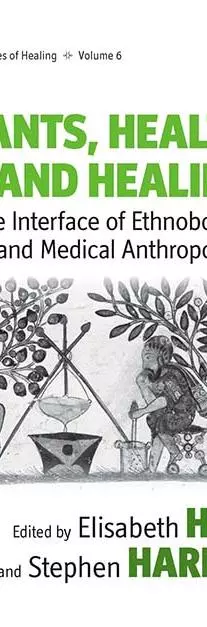
2010, Elisabeth Hsu and Stephen Harris (eds), Plants, Health and Healing: on the Interface of Ethnobotany and Medical Anthropology, Epistemologies of Healing, Volume 6. Oxford: Berghahn. 316 pp. (with EH's intro, 3 co-authored editorial introductions, and 6 articles, one by EH, 25,000 words, in hardback and paperback).
[1998] 2010, 米歇尔奥皮茨Michael Oppitz and 伊丽莎白许 Elisabeth Hsu (eds), Yang Fuquan 杨福泉et al. (transl.): 纳西, 摩梭,民族志:亲属制, 仪式, 象形文字(Naxi and Moso Ethnography: Kin, Rites, Pictographs). 昆明:云南大学出版社, Kunming: Yunnan University Press. 402 pp. (translation of 1998, in paperback).
2009, Elisabeth Hsu and Gunnar Stollberg (eds), Globalizing Chinese Medicine. Special Issue, Medical Anthropology: Cross-Cultural Studies in Health and Illness 28 (2) : 109-188. (90 pp.) with co-authored introductory brief, and 3 articles, one by EH.
2008, Elisabeth Hsu (ed), The Globalization of Chinese Medicine and Meditation Practices. Special Issue, East Asian Science and Technology Studies 2 (4): 461566. (105 pp.) with EH's intro and 5 articles, one a revised article in French by EH.
2008, Elisabeth Hsu (ed), The Senses and the Social. Special Issue, Ethnos. 73 (4): 433-563. (130 pp.) with EH's intro, and 6 articles.
2007, Elisabeth Hsu and Christopher Low (eds), Wind, Life, Health: Anthropological and Historical Approaches. Special Issue No 2, Journal of the Royal Anthropological Institute, Vol 13: S1-S178. (178 pp.) In 2008 published as book, with Oxford: Blackwell.
2005, Elisabeth Hsu and Doreen Montag (eds), Medical Anthropology in Europe: Teaching and Doctoral Research (a list of 37 Universities that offer teaching and research), Wantage: Sean Kingston. ISBN 0-9545572-5-5, (111 pp., in paperback)
2002, Elisabeth Hsu and E. Høg (eds), Countervailing Creativity: Patient Agency in the Globalisation of Asian Medicines Special Issue, Anthropology and Medicine 9 (3): 205-358. (153 pp.). with co-authored Intro by Erling Høg and EH, partially translated into Chinese in 2021.
2001, Elisabeth Hsu (ed), Innovation in Chinese Medicine, Cambridge: Cambridge University Press: Cambridge. 426 pp. With intro and 6 editorial intros by EH, plus 12 original chapters, one by EH (in hardback and paperback).
1998, Michael Oppitz and Elisabeth Hsu, Naxi and Moso Ethnography: Kin, Rites, Pictographs, Zürich: Völkerkundemuseum. 396 pp. With EH's intro, and 12 chapters, one by EH (in hardback).
Journal articles and Book chapters
Hsu, Elisabeth (ed) 2025. Special Section on Medical Anthropology of Care and Self-Care. Medical Anthropology 44 (2): 97–167.
Hsu, E. (2025). An Introduction to the Medical Anthropology of Care and Self-Care. Medical Anthropology, 44 (2), 97–108. https://doi.org/10.1080/01459740.2025.2479668
Hsu, E. [2008] 2025, ‘Medical Pluralism', in S.R. Quah (ed), International Encyclopedia of Public Health. 3rd edition, vol. 1, 34-42 (Thoroughly revised).
Hsu E. 2024. The five emotions and their treatment in Chinese medicine (Su wen 5.3). In Douglas Cairns and Curie Virág (eds) In the Mind, in the Body, in the World: Emotions in Early China and Ancient Greece. Oxford: Oxford UP, 95-113.
Hsu, E. 2024. Figurations of feasting on fermented food in four remote regions of Switzerland, with hope, for health, at home. In Bernhard Hadolt und Andrea Stöckl (eds) Hope and Uncertainty in Health and Medicine. Imagining the Pragmatics of Medical Potential. Health, Communication & Society 3. Bielefeld: Transcript, 251-69.
Hsu, E. 2022 [expanded and revised version of 2018]. Traditional Chinese Medicine: history, ethnography, and practice. In Dorothea Lüddeckens, Philipp Hetmanczyk, Pamela E. Klassen, and Justin B. Stein (eds) Routledge Handbook of Religion, Medicine, and Health. London: Routledge, 2022, pp. 126-140.
Cheung, H., Doughty, H., Hinsley, A., Hsu, E., Lee, T.M., Milner-Gulland, E.J., Possingham, H.P. and Biggs, D. 2021. Understanding traditional Chinese medicine to deliver conservation outcomes. People and Nature (2021)3:115-128. DOI: https://doi.org/10.1002/pan3.10166
Hsu, E. 2021. The healing green, cultural synaesthesia and triangular comparativism [A sensory approach]. Semiotics of Plant-Human Sociality. Special Issue. Ethnos: Journal of Anthropology 84 (2), 2021, pp. 295-308. DOI: https://doi.org/10.1080/00141844.2020.1768137
Hsu, Elisabeth and Chee Han Lim 2021 [expanded version of 2016]. Enskilment into the environment: the Yijin jing worlds of jin and qi, [A sensory approach]. In Laplante, Julie, Gandsman, Ari, and Willow Scobie (eds) Search after method: sensing, moving, and imagining anthropological fieldwork, Methodology and history in anthropology 40, 2021, pp. 145-63. [peer reviewed]
Hsu E. 2021. Movements that generate synchronicity in the Yijin jing 易筋經 (‘Canon for Supple Sinews'), a sensory approach, In The Right Moment, Essays offered to Barbara Baert, Laureate of the 2016 Francqui Prize in Human Sciences, Studies in Iconology 20, Leuven: Peeters, 2021, pp. 399-414.
Cheung, H., Doughty, H., Hinsley, A., Hsu, E., Lee, T.M., Milner-Gulland, E.J., Possingham, H.P. and Biggs, D. 2021. Understanding Traditional Chinese Medicine to deliver conservation outcomes. People and Nature (2021) 3:115-128. DOI: https://doi.org/10.1002/pan3.10166
Hsu E. 2021. Lessons learnt from a pandemic: outline, pp. 2-4, and: Policies and predispositions: reflections on the limitations of culturalism, pp. 19-24, Lessons learnt from a Pandemic: COVID-19 in Perspective. Special Issue, Hsu, E., Esposito, P, Sheppard, P. Ulijaszek S. (eds) Journal of the Anthropological Society of Oxford-online, New Series, 13 (2): 1-75.
Hsu, E. 2020. How to read a recipe? Working backwards from the prescription to the complaint. In Ulrike Steinert (ed) Systems of classification in premodern medical cultures: sickness, health and local epistemologies. London: Routledge. 57-83. DOI: https://doi.org/10.4324/9780203703045
Sun, X. and E. Hsu. 2020. Translation of Beijing's recommendations for Traditional Chinese Medicine (TCM) treatment of Covid-19. Responding to an unfolding pandemic: Asian Medicines and Covid-19. Sienna Craig, Barbara Gerke, and Jan van der Valk (eds) Special Issue. Fieldsights: Hot Spots. (accessed 8 Aug 2020).
Peng W. and E. Hsu. 2020. Three qinghao formulae for treating epidemics (wen yi). Responding to an unfolding pandemic: Asian Medicines and Covid-19. Sienna Craig, Barbara Gerke, and Jan van der Valk (eds) Special Issue. Fieldsights: Hot Spots. (accessed 8 Aug 2020).
Zhu, Buxian, Ding, Zewan, and Elisabeth Hsu 2020. Allium fistulosum congee as a home remedy to ward off the corona virus at an early stage. [letter to the editor], Integrative medicine research 9(3), p. 100463. (accessed 24 Aug 2020).
Hsu E. 2019: Entangled histories: insights gained from a hodological approach to the Blue Beryl's Thanka on Metaphors of the Body, in J. Gentz (ed) China and the World—the World and China—A transcultural Perspective, vol 1: 232-250. Deutsche Ostasienstudien 37. Gossenberg: Ostasian Verlag.
Hsu E. 2019: Durkheim's Effervescence and Its Maussian Afterlife in Medical Anthropology. Durkheimian Studies 23: 76-105. https://doi.org/10.3167/ds.2017.230106.
Hsu, E. (2018). Traditional Chinese Medicine: Its Philosophy, History, and Practice. In H. Callan (ed) The International Encyclopedia of Anthropology, Hoboken,N.J.: Wiley. doi: https://doi.org/10.1002/9781118924396.wbiea2369
Hsu E. 2018: The Iconography of Time: What the Visualization of Efficacious Movement (shi 勢) tells us about the composition of the Yi jin jing 易筋經 (Canon for Supple Sinews). In. V. Lo and P. Barrett (eds) Imagining Chinese Medicine. Sir Henry Wellcome Asian Series. Leiden: Brill, 89-99.
Hsu, E. 2018: Diverse biologies and experiential continuities: a physiognomic reading of the many faces of malaria in the Chinese materia medica. [A sensory approach]. In Tariq Aftab, M. Naeem, M. Masroor, A. Khan (eds) Artemisia annua: Prospects, Applications and Therapeutic Uses. Boca Raton: CRC Press, 1-15. [This is an original article, a much expanded and revised version of 2009].
Hsu, E. 2017,' Patients, practitioners, and “pots”: probing Chinese medicine in East Africa', L'Uomo Societa' Tradizione e Sviluppo n.1., 27-47.
Hsu, E. 'Introduction'. In E. Hsu (ed). Converging Soul Substances in Southeast Asia:Introduction. In E. Hsu (ed.) 2017: The convergence of soul substances in Southeast Asia, and the spillage of blood: notions of personhood and health in transition, Special Section, Asiatische Studien/Asian Studies 71 (1): 243-54. DOI: https://doi.org/10.1515/asia-2017-0001
Hsu E., Huber F.K. and C.S. Weckerle 2017. 'Condensing Soul Substances within the House: The Rice-boiling Shuhi of Southwest China'. In E. Hsu (ed.) 2017: The convergence of soul substances in Southeast Asia, and the spillage of blood: notions of personhood and health in transition, Special Section, Asiatische Studien/Asian Studies 71 (1): 281-303. DOI: https://doi.org/10.1515/asia-2016-0023
Huber F.K., Weckerle C.S. and E. Hsu 2017, 'The Shuhi House between Reformist China and Revivalist Tibet'. In E. Hsu (ed.) 2017: The convergence of soul substances in Southeast Asia, and the spillage of blood: notions of personhood and health in transition, Special Section, Asiatische Studien/Asian Studies 71 (1): 353374. DOI: https://doi.org/10.1515/asia-2016-0028
Hsu E. 2016, ‘'Bing'-distress in the 'Zuo zhuan': the not-so-good-life, the social self and moral sentiment among persons of rank in Warring States China', In R.A.H. King (ed.) The Good Life and Conceptions of Life in Early China and Graeco-Roman Antiquity, Chinese Western Discourse 3. Walter de Gruyter GmbH & Co KG, 2016, pp. 157-180.
Hsu, E. 2016, 'Humour as a mode of cognition', In Lidia D. Sciama (ed.) Humour, Comedy and Laughter: Obscenities, Paradoxes, Insights and the Renewal of Life, Social Identities 8. Oxford: Berghahn, 2016, pp. 58-75.
2016. Hsu, Elisabeth and Chee Han Lim, ‘Enskilment into the environment: the Yijin jing worlds of jin and qi', [A sensory approach]. Berlin: Max-Planck-Institut für Wissenschaftsgeschichte preprint series no. 486. [some details in text differ from that of 2021].
Hsu, E. 2015, ‘From social lives to playing fields: ‘the Chinese antimalarial' as artemisinin monotherapy, artemisinin combination therapy and qinghao juice', Stories and Itineraries on the Making of Asian Industrial Medicines, Laurent Pordié and Anita Hardon (eds) Special Issue, Anthropology & Medicine 22 (1), 2015, pp. 75-86.
Hsu, E. 2015, with Stanley Ulijaszek, ‘Introduction. In In C. Potter, S. Ulijaszek & E. Hsu (eds) 'Medical Anthropology at Oxford: The First Decade and Beyond'', Journal of the Anthropological Society of Oxford-online (Special Edition) 7 (3), 2015, pp. 247-255.
Hsu, E. 2014, ‘How techniques of herbal drug preparation affect the therapeutic outcome: reflections on Qinghao 青蒿 (Herba Artemisiae annuae) in the history of the Chinese materia medica', In Tariq Aftab, J. F. S. Ferreira, M. M. A. Khan & M. Naeem (eds) Artemisia annua – Pharmacology and biotechnology, Heidelberg: Springer, 2014, pp. 1-8.
Hsu, E. 2013, ‘Afterword: On Naming and the Politics of Practice', East Asian Science, Technology and Society: An International Journal (Special Issue on Tibetan Medicine: Contemporary issues) 7, 2013, pp. 505-511.
Hsu, E. 2013, ‘'Holism' and the medicalisation of emotion: the case of anger in Chinese medicine', In P. Horden and E. Hsu (eds) The Body in Balance: Humoral Medicines in Practice, Oxford: Berghahn, 2013, pp. 197-217.
Hsu, E. 2013, ‘What next? Balance in medical practice and the medico-moral nexus of moderation', In P. Horden and E. Hsu (eds) The Body in Balance: Humoral Medicines in Practice, Oxford: Berghahn, 2013, pp. 259-280.
Hsu, E. 2012, ‘'Feeling Lighter': Why the patient's treatment evaluation matters to the health scientist, Topical Review Article', Integrative Medicine Research 1 (1), 2012, pp. 5-12.
Hsu, E. 2012, ‘Medical Anthropology in Europe - 'Quo vadis?'', Anthropology and Medicine, Special Issue: Medical Anthropology in Europe: Shaping the Field 19 (1), 2012, pp. 51-61.
Hsu, E. 2012, with Caroline Potter, ‘Medical anthropology in Europe: shaping the field', Anthropology and Medicine, Special Issue: Medical Anthropology in Europe: Shaping the Field 19 (1), 2012, pp. 1-6.
Hsu, E. 2012, ‘Mobility and connectedness: Chinese medical doctors in Kenya', In H. Dilger, A. Kane and S. A. Langwick (eds) Medicine, mobility and power in global Africa, Bloomington: Indiana University Press, 2012, pp. 295-315.
Hsu, E. 2012, ‘Treatment Evaluation: An Anthropologist's Approach', In S. Scheid and H. MacPherson (eds) Integrating East Asian Medicine into Contemporary Healthcare, London: Churchill Livingstone, 2012, pp. 157-172.
Hsu, E. 2011, ‘Expériences de la personne, de la santé, et de la maladie en Chine', In M. Godelier (ed.) Maladie et Santé Selon les Sociétés et les Cultures, Paris: Presses Universitaires de France, 2011, pp. 75-110.
Hsu, E. 2010, ‘Le diagnostic du pouls dans la chine mediévale d'apres les manuscrits de Dunhuang (with notes on P2115, P3106, P3287, P3477, P3481, P3655, P4093, S79,S181, S202, S5614, S6245, S8289, plus index', In C. Despeux Medicine, religion et société dans la Chine mediévale: Etude de manuscrits chinois de Dunhuang et de Turfan, Paris: College de France, Institut des Haute Etudes Chinoises, 2010, pp. 107-184.
Hsu, E. 2010, with W. Nienhauser (co-translators), ‘Memoir 45', In W. Nienhauser (ed.) The Grand Scribe's Records, Ssu-ma Ch'ien, Volume 9; the Memoirs of Han China, Part 2, Indiana University Press, 2010, pp. 1-88.
Hsu, E. 2010, ‘Plants in Medical Practice and Common Sense: On the Interface of Ethnobotany and Medical Anthropology', In E. Hsu and S. Harris Plants, Health and Healing: on the Interface of Ethnobotany and Medical Anthropology, Oxford: Berghahn, 2010, pp. 1-48.
Hsu, E. 2010, ‘Qing hao 青蒿 (Herba Artemisiae annuae) in the Chinese Materia Medica', In E. Hsu and S. Harris (eds) Plants, Health and Healing: on the Interface of Ethnobotany and Medical Anthropology. Epistemologies of Healing 6. Oxford: Berghahn, pp. 83-130.
Hsu, E. 2010, ‘Tian'anmen in Yunnan: Emotions in the Field during a Political Crisis', In J. Davies and D. Spencer Emotions in the Field: the Psychology and Anthropology of Fieldwork Experience, Stanford: Stanford University Press, 2010, pp. 155-170.
Hsu, E. 2009, ‘Experiences of Personhood, Health, and Disease in China: Some Reflections', Cambridge Anthropology 29 (3), 2009, pp. 69-84.
Hsu, E. 2009, ‘Outward Form (xing 形) and Inward Qi 氣: The “Sentimental Body” in Early Chinese Medicine', Early China 32 (-), 2009, pp. 103-24.
Hsu, E. 2009, ‘Diverse Biologies and Experiential Continuities: Did the Ancient Chinese Know that Qinghao Had Antimalarial Properties?', Medicine and the Soul of Science: Essays by and in Memory of Don Bates. Special Issue. Canadian Bulletin of Medical History 26 (1), 2009, pp. 203-213.
Wright, Colin W., Linley, Peter A., Brun, Reto, Wittlin, Sergio and Hsu, E. 2009. ‘Ancient Chinese Methods Are Remarkably Effective for the Preparation of Artemisinin-Rich Extracts of Qing Hao with Potent Antimalarial Activity', Artemisinin (Qinghaosu): Commemorative Issue in Honor of Professor Youyou Tu on the Occasion of her 80th Anniversary), Special Issue, Molecules 15 (2): pp. 804-812. https://www.mdpi.com/journal/molecules/special_issues/artemisinin
Hsu, E. 2009, ‘Wonders of the Exotic: Chinese Formula Medicines on the East African Coast', In Kjersti Larsen (ed) Knowledge, Renewal and Religion: Repositioning and Changing Ideological and Material Circumstances among the Swahili on the East African Coast, pp. 280-299.
Hsu, E 2009, ‘Chinese Propriety Medicines: An "Alternative Modernity?" The Case of the Anti-malarial Substance Artemisinin in East Africa', Globalising Chinese medicine. Special Issue. Elisabeth Hsu and Gunnar Stollberg (eds), Medical Anthropology: Cross-Cultural Studies in Health and nIllness 28 (2), 2009, pp. 111140.
M. Willcox (in consultation with E. Hsu) 2009. ‘Artemisia Species: From Traditional Medicines to Modern Antimalarials – and Back Again', The Journal of Alternative and Complementary Medicine 15 (2), 2009, pp. 101-109.
Hsu, E 2008, ‘Introduction', The Globalization of Chinese Medicine and Mediatation Practices. Special Issue, E. Hsu (ed) East Asian Science, Technology and Society: an International Journal 2 (4): 461-464.
Hsu, E 2008, The History of Traditional Chinese medicine in the People's Republic of China The Globalization of Chinese Medicine and Meditation Practices. Special Issue. E Hsu (ed), East Asian Science, Technology and Society: an International Journal 2 (4): 465-484.
Hsu, E 2008, ‘Medicine as Business: Chinese Medicine in Tanzania', China Returns to Africa: A Rising Power and a Continent Embrace, pp. 221-235.
Hsu, E 2008, ‘A Hybrid Body Technique: Does the Pulse Diagnostic cun guan chi Method Have Chinese-Tibetan Origins?', Gesnerus 65: pp. 5–29.
Hsu, E. 2008, ‘Medical Pluralism', International Encyclopedia of Public Health. K Heggenhousen et al. (ed). Vol. 4, pp. 316-321.
Hsu, E. and R.L. Barrett 2008. ‘Traditional Asian Medical Systems', International Encyclopedia of Public Health 4 K Heggenhousen et al. (ed). Vol. 4, pp. 349-57.
Hsu, E. (ed) 2008, ‘The Senses and the Social: An Introduction', The Senses and the Social. Special Issue. Ethnos 73 (4), 2008, pp. 433-443.
Hsu, E. 2008, ‘脈,視覺到聽覺再到觸覺診查:運用「身體感」對漢代早期醫學手稿的新解讀 (From a visual to an auditory to a tactile examination of mai: a new reading of Han medical manuscript texts based on the anthropology of bodily experiences)', 體物入微:物與身體感的研究 (Engaging Things: Researches on Things and Experiences of the Body), 2008, pp. 135-64.
Hsu, E. 2007, ‘Zanzibar and its Chinese Communities', New Chinese Diasporas. Special Issue. Populations, Space and Place 13 (2), 2007, pp. 113-124.
Hsu, E. and Christopher Low 2007, ‘Introduction', Wind, Life, Health: Anthropological and Historical Approaches. Special Issue No. 2, Journal of the Royal Anthropological Institute 13 (s1), 2007, pp. S1-S17.
Hsu, E. 2007, ‘The Experience of Wind in Early and Medieval Chinese Medicine', Wind, Life, Health: Anthropological and Historical Approaches. Special Issue, Journal of the Royal Anthropological Institute 13 (s1), 2007, pp. S117-S134.
Hsu, E. 2007, ‘La médicine chinoise traditionelle en Republique populaire de Chine: d'une ‘tradition inventée' à une ‘modernité alternative”, La pensée en Chine aujourd'hui, 2007, pp. 214-238.
Hsu, E. 2007, ‘The Biological in the Cultural: The Five Agents and the Body Ecologic in Chinese Medicine', In D. Parkin and S. Ulijaszek, Holistic Anthropology: Emergence and Convergence, 2007, pp. 91-126.
Hsu, E. 2007, ‘Huangdi neijing, Ishinpo, Zhubing yuanhou lun, Qianjin fang, Sun Simiao, Wang Bing, jingluo, qixue, renmai and dumai, wuzang (ten brief entries)', The Encyclopedia of Taoism, 2007.
Hsu, E. 2007, ‘中醫和藏醫脈診中身體技術的視覺描述 ﹣對‘寸關尺'診法史的新闡釋 (How Tibetan medicine shapes Chinese medicine: Visual depictions of body techniques in Chinese and Tibetan pulse diagnosis throw new light on the history of the examination method cun guan chi)', 形象 中 醫 - 中醫厲史圖像研究, 2007, pp. 211- 215.
Hsu, E. 2007, ‘Chinese Medicine in East Africa and its Effectiveness', IIAS (International Institute for Asian Studies) Newsletter 22 (Autumn), 2007.
Hsu, E. 2006, ‘Chunyu Yi', Dictionary of Medical Biographies 2, 2006, pp. 343-348.
Hsu, E. 2006, ‘Participant Experience: Learning to be an Acupuncturist, and Not Becoming one', Critical Journeys: The Making of Anthropologists, 2006, pp. 149-163.
Hsu, E. 2006, ‘The History of Qing Hao in the Chinese Materia Medica', Transactions of the Royal Society of Tropical Medicine and Hygiene 100 (6), 2006, pp. 505-508.
Hsu, E. 2006, ‘Reflections on the ‘Discovery' of the Antimalarial Qinghao', Future Developments in Clinical Pharmacology. Special Issue. British Journal of Clinical Pharmacology 61 (6), 2006, pp. 666-670.
Hsu, E. 2005, ‘Time inscribed in Space, and the Process of Diagnosis in African and Chinese Medical Practices', The Qualities of Time: Anthropological Approaches, 2005, pp.155-170.
Hsu, E. 2005, ‘Tactility and the Body in Early Chinese Medicine', Science in Context 18 (1), 2005, pp. 7–34.
Hsu, E. 2005, ‘Acute Pain Infliction as Therapy', The Senses. Special Issue Etnofoor 18 (1), 2005, pp. 78-96.
Hsu, E. 2002, with Erling Høg, ‘Introduction', Countervailing Creativity: Patient Agency in the Globalisation of Asian Medicines. Anthropology and Medicine. Special Issue 9 (3), 2002, pp. 205-221.
Hsu, E. 2002, “The medicine from China has rapid effects': Chinese medicine patients in Tanzania', Countervailing Creativity: Patient Agency in the Globalisation of Asian Medicines. Anthropology and Medicine. Special Issue 9 (3), 2002, pp. 291-314.
Hsu, E. 2002, ‘Medical Anthropology, Material Culture, and New Directions in Medical Archaeology', Practitioners, Practices and Patients: New Approaches to Medical Archaeology and Anthropology, 2002, pp. 1–15.
Hsu E. 2002, ‘Die drei Koerper - oder sind es vier?', 2002, Curare 24 (1+2): 5764.
Hsu, E. 2001, ‘Figuratively Speaking of ‘Danger of Death' in Chinese Pulse Diagnostics', Historical Aspects of Unconventional Medicine. Approaches, Concepts, Case Studies, 2001, pp. 193-210.
Hsu E. 2001, ‘Introduction, plus six brief introductions to six sections', Innovation in Chinese Medicine, 2001, pp. 1-11, etc.
Hsu E. 2001, ‘Pulse Diagnostics in the Western Han: How mai and qi determine bing', Innovation in Chinese Medicine, 2001, pp. 51-91.
Hsu E. 2000, ‘Spirit (shen), Styles of Knowing, and Authority in Contemporary Chinese Medicine', Culture, Medicine, and Psychiatry 24 (2), 2000, pp. 197-229.
Hsu E. 2000, ‘Towards a Science of Touch, Part I: Chinese Pulse Diagnostics in Early Modern Europe', Anthropology and Medicine 7 (2), 2000, pp. 251-268.
Hsu E. 2000, ‘Towards a Science of Touch, Part II: Representations of the Tactile Experience of the Seven Chinese Pulses indicating Danger of Death in Early Modern Europe', Anthropology and Medicine 7 (3), 2000, pp. 319-333.
Hsu E. 2000, ‘Zangxiang (The Hidden and Apparent) in the Canon of Categories (1624) and Body-Centred Traditional Chinese Medicine in the PRC', Studies in the History of Natural Sciences 19 (2), 2000, pp. 165-87.
Hsu E. 1998, ‘Yinyang and Mao's Dialectics in Traditional Chinese Medicine', Asia in Swiss Anthropology - Asien in der Schweizer Ethnologie. Sondernummer. Asiatische Studien 52(2), 1998, pp. 419-444.
Hsu E. 1998, 'Introduction', Naxi and Moso Ethnography: Kin, Rites, Pictographs, 1998, pp. 19-20.
Hsu E. 1998, ‘Moso and Naxi: The House', Naxi and Moso Ethnography: Kin, Rites, Pictographs, 1998, pp. 47-80.
Hsu E. 1997, ‘La Soupe, Die Suppe', Manger en Chine, Essen in China, 1997, pp. 334-347.
Hsu E. 1996, ‘Innovations in Acumoxa: Acupuncture Analgesia, Scalp and Ear Acupuncture in the People's Republic of China', Social Science and Medicine 42 (3), 1996, pp. 421-430.
Hsu E. 1996, ‘The Polyglot Practitioner: Towards Acceptance of Different Approaches in Treatment Evaluation', Communication in and about Alternative Therapies. Studies in Alternative Therapy 3, 1996, pp. 37-53.
Hsu E. 1996, ‘Acumoxa in Yunnan: A Case Study of Standardising Chinese Medicine at a Medical College of the PRC', Journal on Southwest China Studies 1, 1996, pp. 217- 248.
Hsu E. 1996, ‘Hexen, base Zungen, und die Wahrheit', Wahrheiten auf der Spur, 1996, pp. 271-279.
Hsu E. 1995, ‘The Manikin in Man: Culture Crossing and Creativity', Syncretism and the Commerce of Symbols, 1995, pp. 156-204.
Hsu E. 1995, ‘Ueber die Harmonie der Säfte - von Galen zur Akupunktur', Krank Warum?, 1995, pp. 313-321.
Hsu E. 1994, ‘Change in Chinese Medicine: Bian and Hua. An Anthropologist's Approach', Notions et Perceptions de Changement en Chine. Mémoires de l'Institut des Hautes Etudes Chinoise 36, 1994, pp. 41-58.
Hsu E. 1993, ‘Schmerz, Individuum und Gemeinschaft', Les Frontières du Mal: Approaches Anthropologiques de la Santé et la Maladie. Ethnologica Helvetica 17/18, 1993, pp. 65-74.
Hsu E. 1992, ‘The Reception of Western Medicine in China: Examples from Yunnan', Science and Empires, Boston Studies in the Philosophy of Science, 1992, pp. 89101.
Hsu E. 1992, ‘The History and Development of Auriculotherapy', Acupuncture in Medicine. Journal of the British Medical Acupuncture Society 10, 1992, pp. 109-18.
Hsu E. 1989, ‘Outline of the History of Acupuncture in Europe', The Journal of Chinese Medicine 29, 1989, pp. 28-32.